Don’t Overcomplicate It: The Only 5 Pages Your Expert Website Needs
If you've been putting off your website because the whole thing feels impossibly big, I want to let you in on a little secret.
Your website doesn't have to be big.
In fact, if you're a coach, consultant, or professional speaker, your website needs exactly five pages to be fully functional, credible, and conversion-ready. Not fifteen. Not even ten. Five.
I know what you're thinking: "But David, shouldn't I have a blog? What about a resources page? Don't I need landing pages and funnels and…"
No. You don't. Not right now.
I've been building websites since 1995 and working exclusively with coaches, consultants, and speakers since 2018. I've seen thousands of expert sites. And here's what I know: the sites that actually convert visitors into clients aren't the ones with the most pages. They're the ones with the right pages — thoughtfully built, clearly structured, and impossible to get lost in.
Today, we're going to walk through the five core pages every expert website needs, what each page should accomplish, and why you don't need anything else to launch something you're genuinely proud of.
Ready? Let's build.
Why Five Pages (And Not More)?
Before we get into the pages themselves, let's talk about why less is more here.
Every page you add to your website is a page someone has to navigate. It's a decision they have to make, a distraction that might pull them away from the thing you actually want them to do. Clarity is key for communicating your message, and typically more pages don't clarify — they dilute (at best) or overwhelm (at worst).
In my book, The Launch Framework Handbook, I offer a simple premise: every page needs to justify its existence. If a page doesn't have a clear objective and a next step it's guiding your visitors toward, it's not earning its spot.
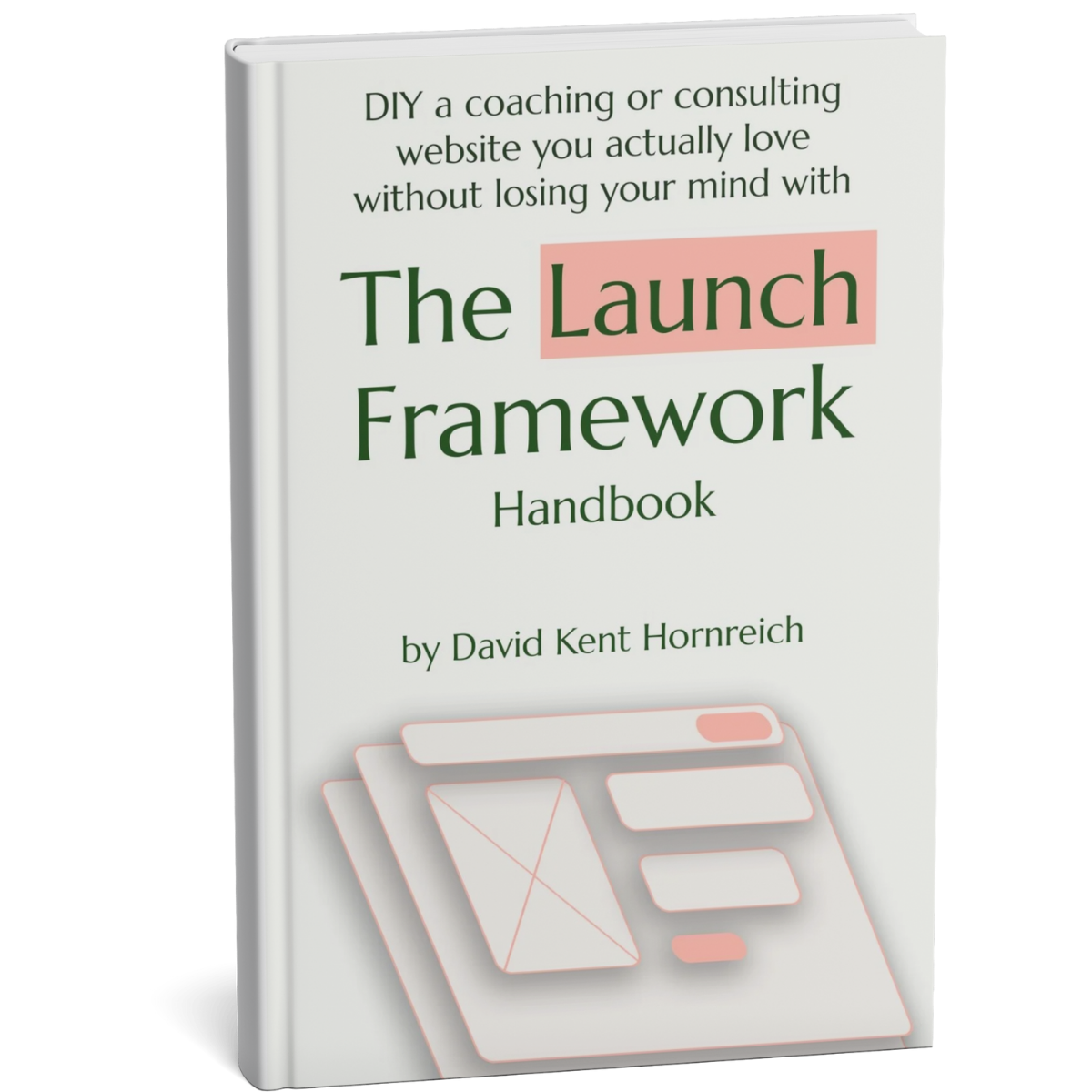
Designed to be readable in an afternoon, The Launch Framework Handbook will have you building and launching a conversion-focused website without the headaches and frustration that come with a typical DIY project.
— OR —
Designed to be readable in an afternoon, The Launch Framework Handbook will have you building and launching a conversion-focused website without the headaches and frustration that come with a typical DIY project.
The five core pages I'm about to walk you through all earn their spot.
Page 1: Your Home Page
Your Home Page is the hub of your entire website. It's the page that appears when someone types your domain name and when someone searches for you by name, which makes it arguably the most important page on your site.
But here's where a lot of experts get it wrong: They treat the Home Page like a it needs to say everything to everyone.
A home page’s job is not to say everything, nor is it to be for everyone.
Keep your storytelling tight, reserve your urge to say more, and make it easy for folks to find what’s most relevant to them. Do these things and you’ll have a strong home page.
What your Home Page should accomplish:
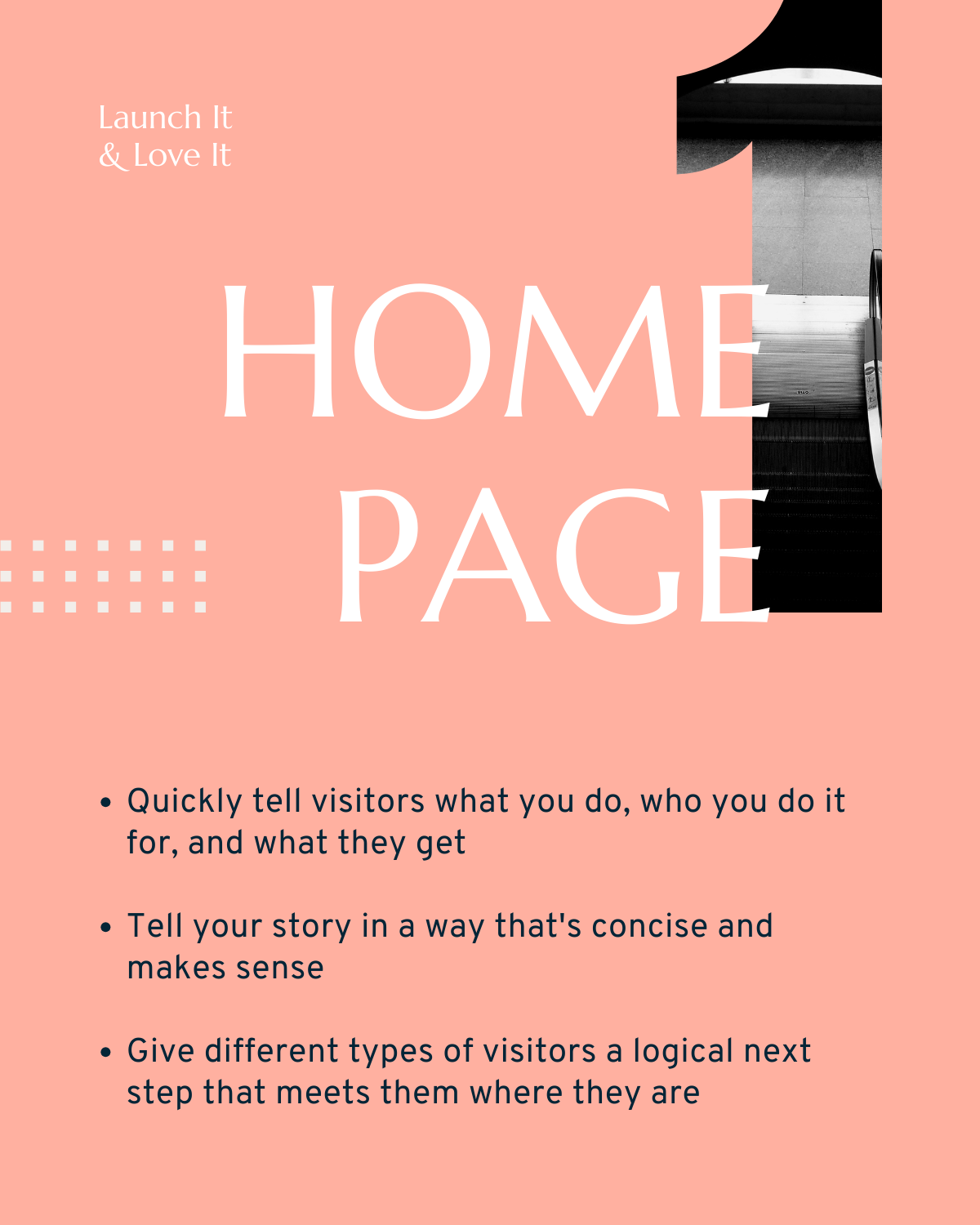
Quickly tell visitors what you do, who you do it for, and what they get
Tell your story in a way that's concise and makes sense
Give different types of visitors a logical next step that meets them where they are
Page 2: Your About Me Page
Here's the irony of the About Me page: it's the one page most people think is all about them — and it's actually the one page that needs to be most about their audience.
Your About Me page is a chance to build trust. It's where potential clients go when they want to know who they're going to be working with. They're looking for someone they can connect with, someone who gets them, someone who has the authority and the heart to actually help them.
So yes, it’s only natural that you'll talk about yourself here. But the lens through which you talk about yourself should always be: "How is this relevant to my audience? Does this help them understand why I'm the right guide for them?"
Your bio on this page isn't a resume, it's a positioning statement. You're not listing your accomplishments for their own sake. You're connecting those accomplishments to what they mean for your clients.
For example: Which line is most impactful when you read it?
"I've been coaching for 15 years"
"After 15 years of coaching, I've developed a no-fluff approach that gets my clients real, measurable results within 90 days"
Number two probably jumps out to you as more impactful — because it’s about connecting experience to the results that the client wants.
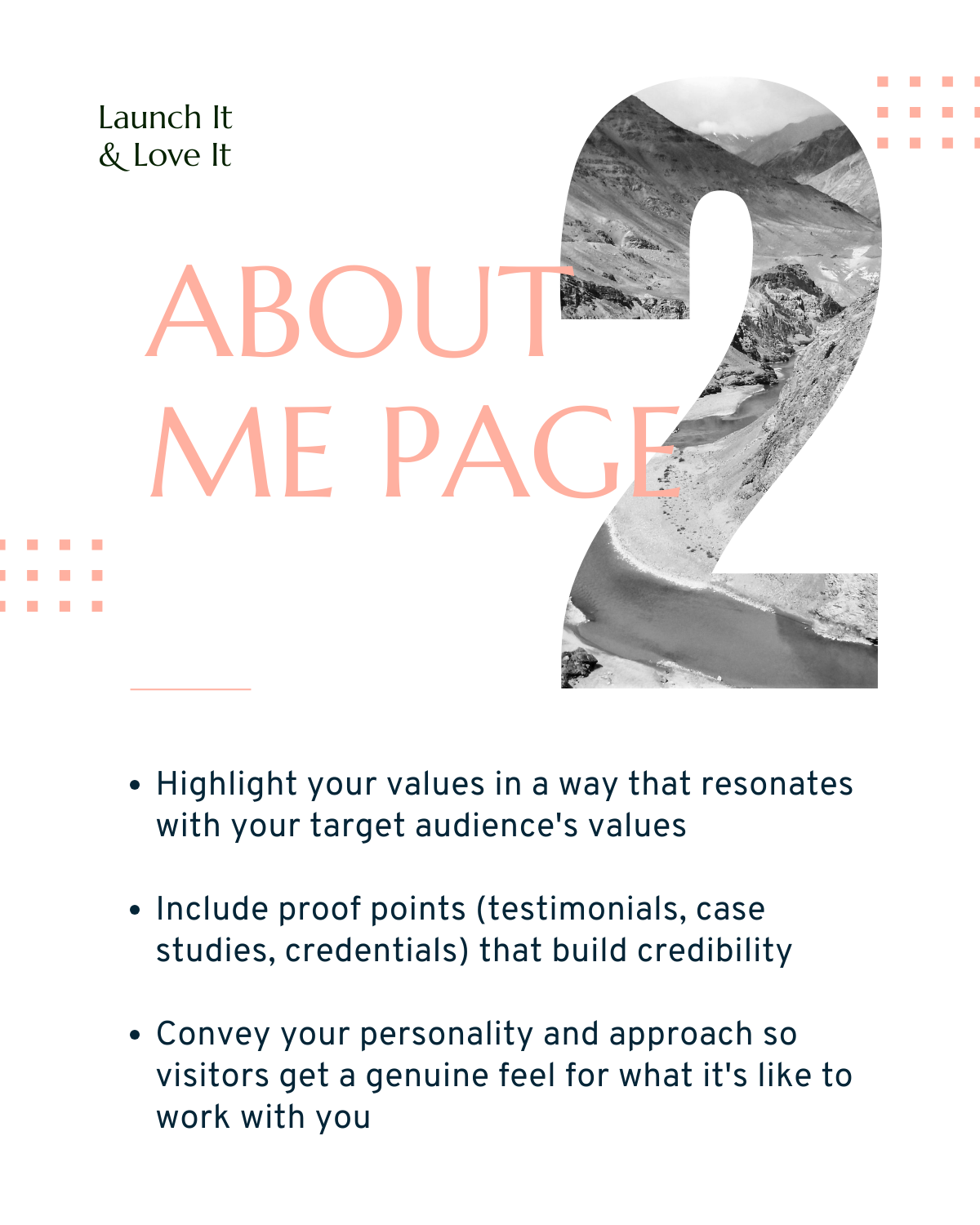
What your About Me page should accomplish:
Highlight your values in a way that resonates with your target audience's values
Include proof points (testimonials, case studies, credentials) that build credibility
Convey your personality and approach so visitors get a genuine feel for what it's like to work with you
Page 3: Your Offer Page (or Pages)
Your Offer Page is where visitors go when they want to know how you can help them.
This is the page that turns curious visitors into paying clients — so it's worth getting right.
There are a few things to know about Offer pages:
You might have more than one
If you offer multiple services or products, you may need multiple Offer pages. As a general rule, an offer deserves its own page if it serves a different audience, delivers meaningfully different outcomes, or follows a different process. If two offers check all the same boxes, they can live on the same page.Clarity is everything
Your visitors need to quickly understand what your offer is, who it's for, and what they get. If they can't figure that out within a few seconds, you've lost them. Use plain, descriptive language — not branded names that require explanation.Like your Homepage, this page isn't about information overload
You don't need to tell your potential clients every detail about what working with you looks like. You need to tell them just enough to get them excited and ready to take the next step. Think of this page like a movie trailer: it gives you enough to know if this is for you, without spoiling the whole film.
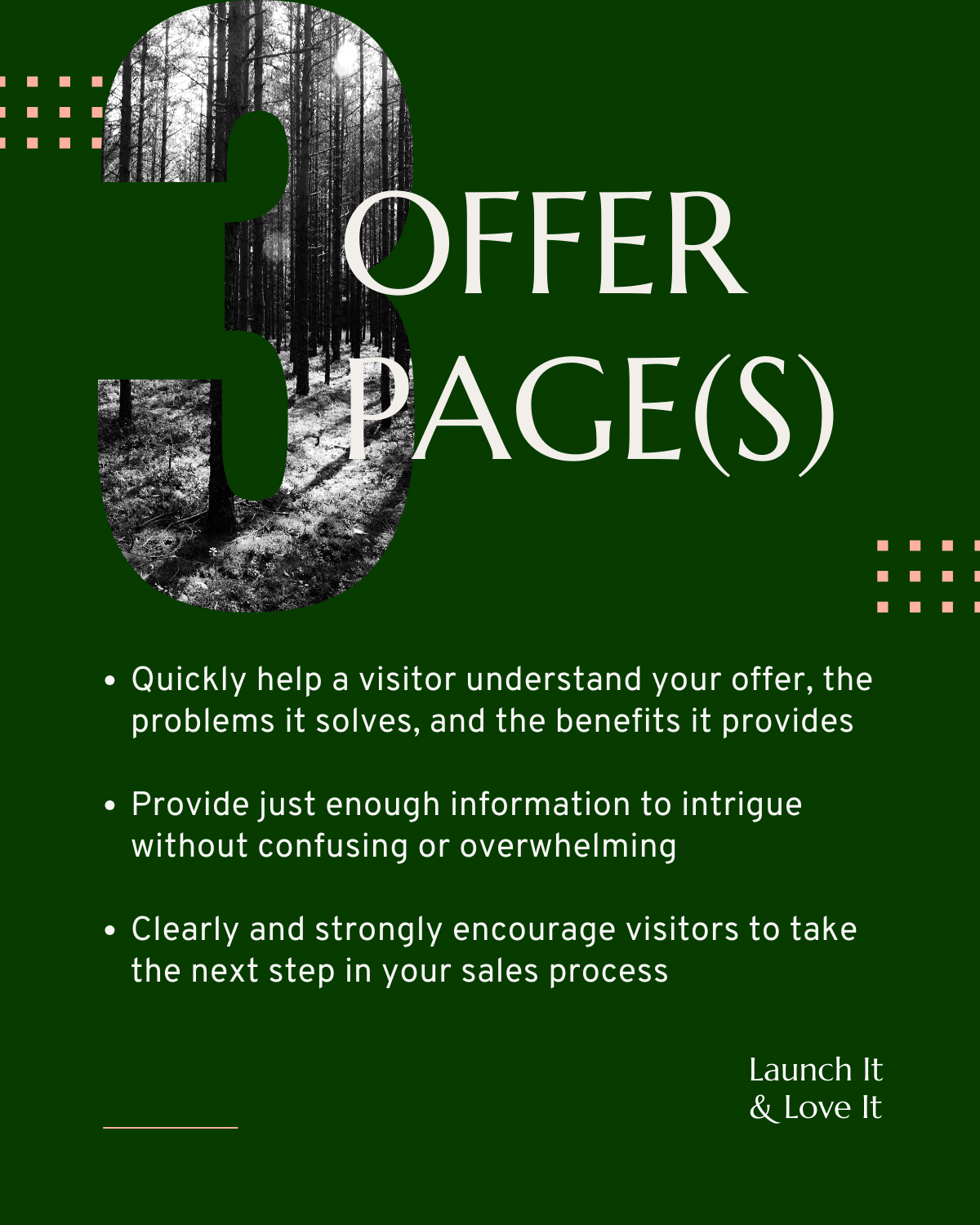
What your Offer page should accomplish:
Quickly help a visitor understand your offer, the problems it solves, and the benefits it provides
Provide just enough information to intrigue without confusing or overwhelming
Clearly and strongly encourage visitors to take the next step in your sales process
Page 4: Your Booking Page
Let's talk about the page that does the actual selling for you.
Your Booking Page is where a potential client goes to take the first step in your sales process. For most coaches and consultants, that first step is booking some sort of free fit call — a discovery call, a getting-to-know-you session, a consultation, whatever you want to call it.
And here's where I see a lot of experts make a critical mistake: they replace their Booking Page with a contact form.
I totally understand the logic. "If someone wants to connect, they'll fill out my contact form and I'll get back to them." But think about what you're actually asking someone to do. They have to fill out a form, wait for you to respond, go back and forth to find a time that works for both of you, and finally — if the stars align and nobody loses interest — get something on the calendar.
Compare that to an automated scheduling tool. Your potential client decides they want to talk to you. In that exact moment, they click a button, see your calendar, pick a time, and boom — they're booked. No waiting. No back and forth. No lost momentum.
In the moment your potential client is most excited and ready to take that next step, you want to make it as easy as possible for them to do it.
A booking page with an embedded scheduling tool like Calendly or Acuity Scheduling does exactly that. It removes friction. It respects your visitor's time. And — here's the part I really love — it immediately shows your potential client what it's like to work with you: organized, easy, and professional.
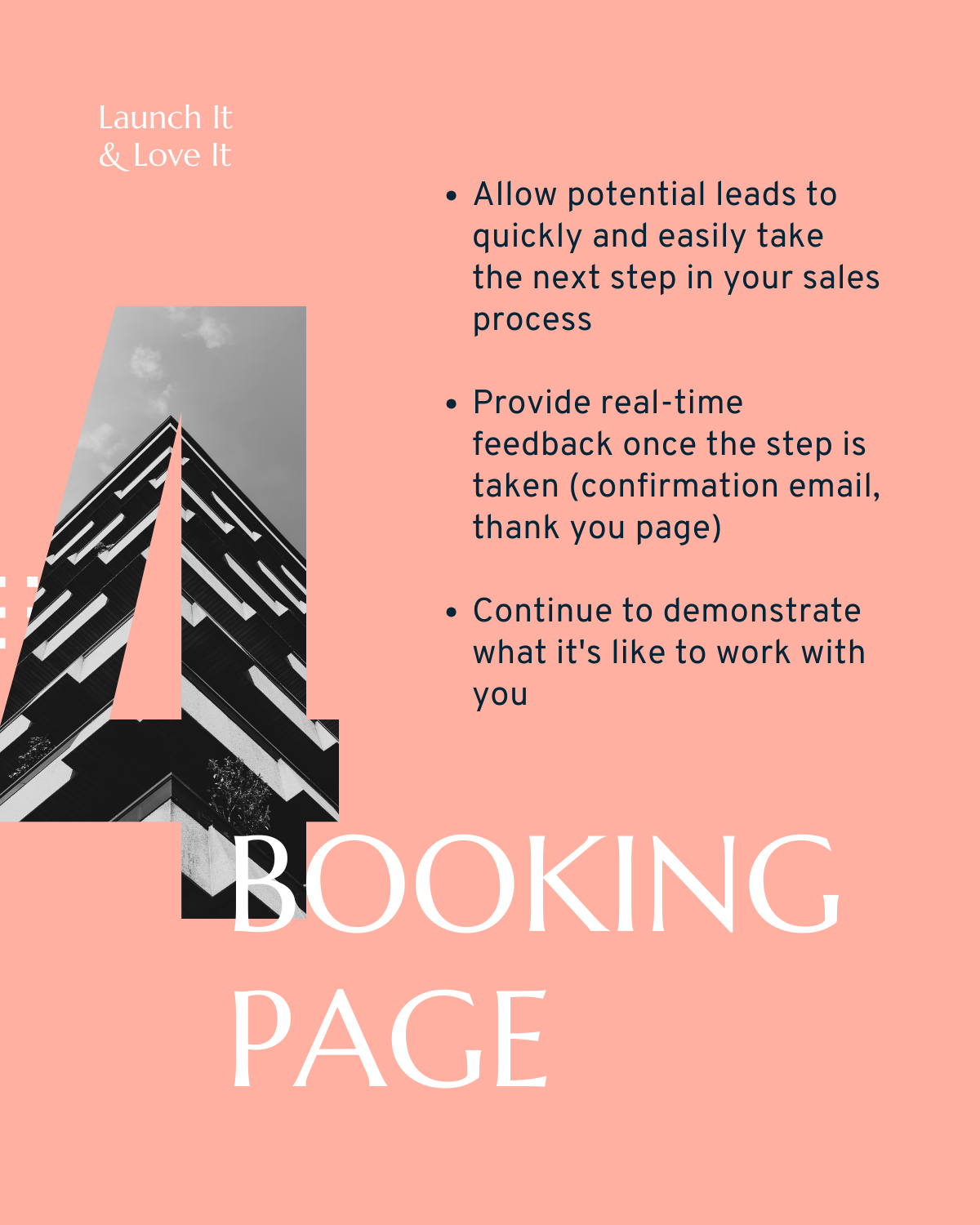
What your Booking Page should accomplish:
Allow potential leads to quickly and easily take the next step in your sales process
Provide real-time feedback once the step is taken (confirmation email, thank you page)
Continue to demonstrate what it's like to work with you
Page 5: Your Contact Page
"Wait," you might be saying. "If I have a Booking Page, why do I also need a Contact Page?"
Great question, and it comes down to this: not everyone who wants to reach out is ready to book a call.
Maybe someone wants to invite you to be a guest on their podcast. Maybe a potential client has a quick question before they commit. Maybe a journalist is working on a story and wants to get a quote. Maybe someone is considering you for a speaking gig and wants to check your availability before making anything official.
These people don't need your booking flow, they just need a way to get in touch. That's what your Contact Page is for.
Keep it simple. A form with four or five fields is plenty: name, email, subject, message. The more questions you make people answer, the fewer people will complete the form. (There are exceptions — if you're trying to qualify leads before they hit your calendar, a slightly longer form can help — but as a default, simpler is better.)
One of my favorite things to do on a Contact Page is include a secondary CTA that links back to the Booking Page. Not everyone who lands on your Contact Page is just asking a casual question — some of them might actually be ready to book, they just landed on the wrong page. Give them a gentle reminder and a quick path to get where they want to go.
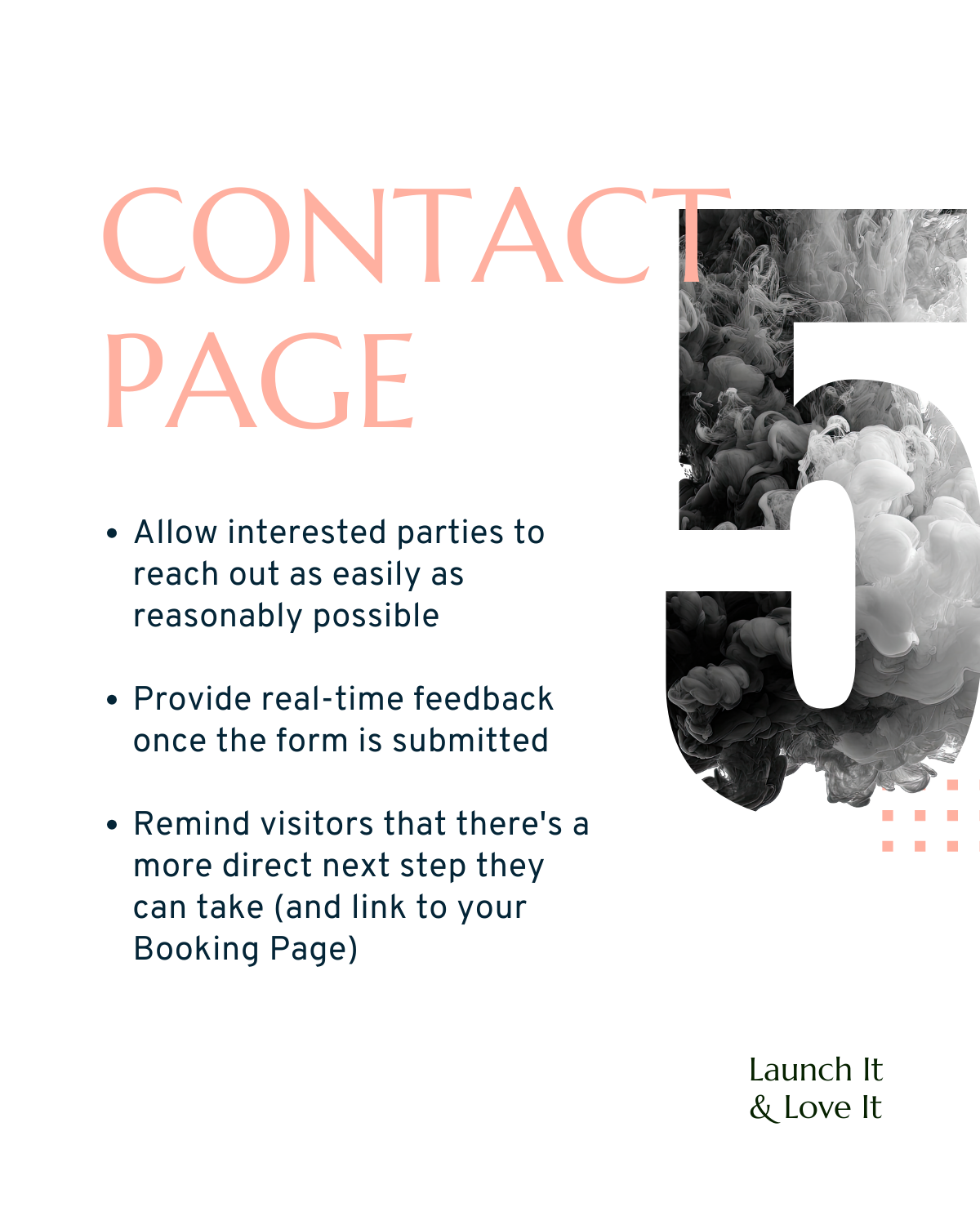
What your Contact Page should accomplish:
Allow interested parties to reach out as easily as reasonably possible
Provide real-time feedback once the form is submitted
Remind visitors that there's a more direct next step they can take (and link to your Booking Page)
"But What About My Blog? My Resources Page? My Events Page?"
I hear you. And I'm not saying those things don't have value — they can, absolutely. But here's my honest take:
Those pages are optional. Your five core pages are not.
A lot of people delay launching their website because they're waiting until they have a full blog, a robust resources library, and a polished events page. But here's the thing: a website with five great pages is infinitely more valuable than a website that's been "almost ready" for two years.
Launch your five core pages first. Get them live. Start sending people to your site. Start learning what's working and what isn't. Then — and only then — layer in the optional pages if and when they make sense for your business.
A blog is worth including if you have a well of valuable knowledge to draw from, you enjoy writing, and you're willing to publish consistently.
A resources page is worth it if you have (or plan to create) downloadable content to build your email list.
An events page is worth it if you host regular live or virtual events.
But none of those things are prerequisites for launching. They're features you can add later. The five core pages? Those are the foundation. Everything else is a bonus.
Your Five-Page Website, Summarized
Here's your cheat sheet:
1. Home Page — The hub. Tells visitors what you do, who you do it for, and what they get. Creates multiple pathways for different types of visitors.
2. About Me Page — Not really about you, but how you help your audience. Builds trust, demonstrates expertise, and conveys your personality.
3. Offer Page(s) — Details how, specifically, you can help. Focuses on outcomes and benefits. Keeps information digestible. Leads to a next step.
4. Booking Page — Makes it easy for potential clients to take the first step in your sales process, right in the moment they're ready.
5. Contact Page — For everyone who isn't quite ready to book but wants to get in touch. Keeps the door open and funnels the right people toward your calendar.
That's it. Five pages. Each one with a clear objective. Each one leading somewhere.
The Only Thing Left To Do Is Launch
I know this stuff can feel bigger than it is. Websites have a way of making even the most capable, accomplished experts feel like they don't know what they're doing.
But here's what I know after 30 years of making websites and seven years of working exclusively with coaches, consultants, and speakers: you don't need more pages, more funnels, or more anything.
You need clarity. You need a plan. And you need to ship.
The five pages above are your plan. Build them thoughtfully, give each one a clear purpose and a clear next step, and you'll have something that works harder for your business than most sites twice its size.
Now go build it. I'll be cheering you on.
Want to skip the trial and error and build your site using the Launch Framework from the start? Check out Launch It & Love It Template Kits — Squarespace templates designed specifically for coaches, consultants, and speakers, built to launch in a weekend.
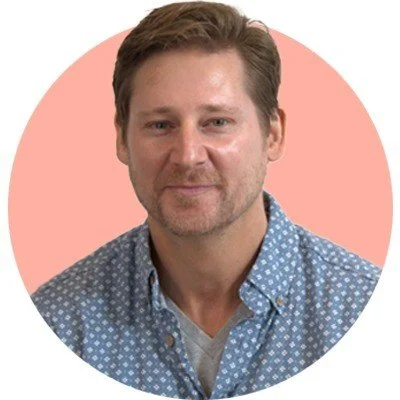
Hi, I'm David!
I've poured my 20+ years professional web design experience into delivering Website Intensives and Website Template Kits designed to help thought leaders (coaches, consultants, professional speakers) get the website they've always wished they had.