The Ultimate Guide to Website Testimonials
Table of Contents
Like this post? Pin it!
If you're a coach, consultant, or expert service provider, testimonials are one of the most powerful tools you've got for building trust with potential clients.
A testimonial done right is social proof. It's a shortcut to trust that's matched by almost nothing else — except maybe a direct referral from a friend. (And honestly, a great testimonial is kind of like a referral from a friend your visitor hasn't met yet.)
But here's the thing: I see people doing testimonials wrong on their websites all the time. Then they wonder why their testimonials aren't pulling their weight.
In this post, we'll look at the right way to collect testimonials and the right way to display them, so they do their job as well as possible for your business.
Let's get into it.
How to Collect Testimonials
How we collect testimonials is core to what we end up displaying, because the way we ask shapes what people say.
The wrong way to ask
The most common approach is to simply ask: "How was it for you?"
That's wide open. Maybe you get a great testimonial out of it. Maybe you get "Diane was great! Five stars!" (Lovely to hear, Diane, but it's not going to convince anybody.) Either way, your testimonials will be inconsistent across the board — some long, some short, some specific, most vague.
The right way to ask: three questions
Instead, ask these three questions, in this order:
What was your situation before we worked together, and how did that make you feel?
What is your situation now that we've worked together, and how does that make you feel?
What was the experience of working with me like for you?
Together, these questions paint a picture of your client's before state, their after state, and the transformation you helped them make.
Notice what's happening here: you're not asking your client to come up with praise out of thin air. You're asking them to tell a story. And stories are specific by nature — which is exactly what makes a testimonial convincing.
Collect testimonials over video
Now let's talk logistics.
I like to collect testimonials over video, during your wrap-up meeting with a client. Just hit record and ask your three questions.
Best case scenario: your client is great on camera, and now you've got a video testimonial you can use on your site. That's a big win.
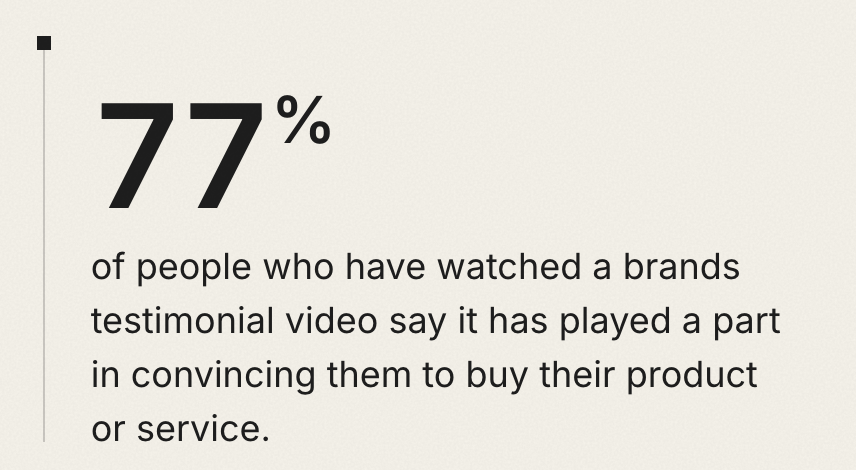
In a Wyzowl survey, 77% of people who'd watched a brand's testimonial video said it played a part in convincing them to buy — and two out of three said they'd be more likely to buy after watching a testimonial video from someone like them. Seeing a real person's face and hearing their voice does something text alone can't.
Worst case scenario: your client isn't comfortable on camera, and you don't use the video at all. But you've still got a system that makes it quick and easy for them to give you a testimonial without having to sit down and write something out. And you don't have to chase them for weeks with "just following up on that testimonial!" emails. (We've all sent those emails. Nobody enjoys sending them.)
Timing matters, too
Your wrap-up meeting is the sweet spot. The change you've created for your client is fresh in their mind, and they're usually at their most excited and enthusiastic to sing your praises.
Wait three months, and that enthusiasm has cooled. They're on to the next thing. Strike while the iron's hot.
Okay — testimonial collected. Now let's look at how to display it on your site.
How to Display Testimonials on Your Site
First, a little editing
Once you've collected your testimonial, I want you to do some editing.
Before you get nervous: tell your client when you record their testimonial that you'll send them a final edit to review and approve. That way it's clear to both of you that you're not changing their words or their intent — you're just tightening things up.
And you'll likely need to tighten things up. Because you collected this testimonial over video, it's probably got some rambling in it, or ideas that jump around rather than arriving in perfect sequential order. That's normal. That's how people talk.
Here are the edits I want you to make.
Step 1: Find the headline
Find the most important line in the testimonial. This is the one line that — if people could only read one line — you'd want them to read.
A couple examples from past clients:
"Theresa was responsive, easy to work with, and communicated with us to help make sure she fulfilled the vision we had for our event."
"Working with Craig was better than what we could've imagined."
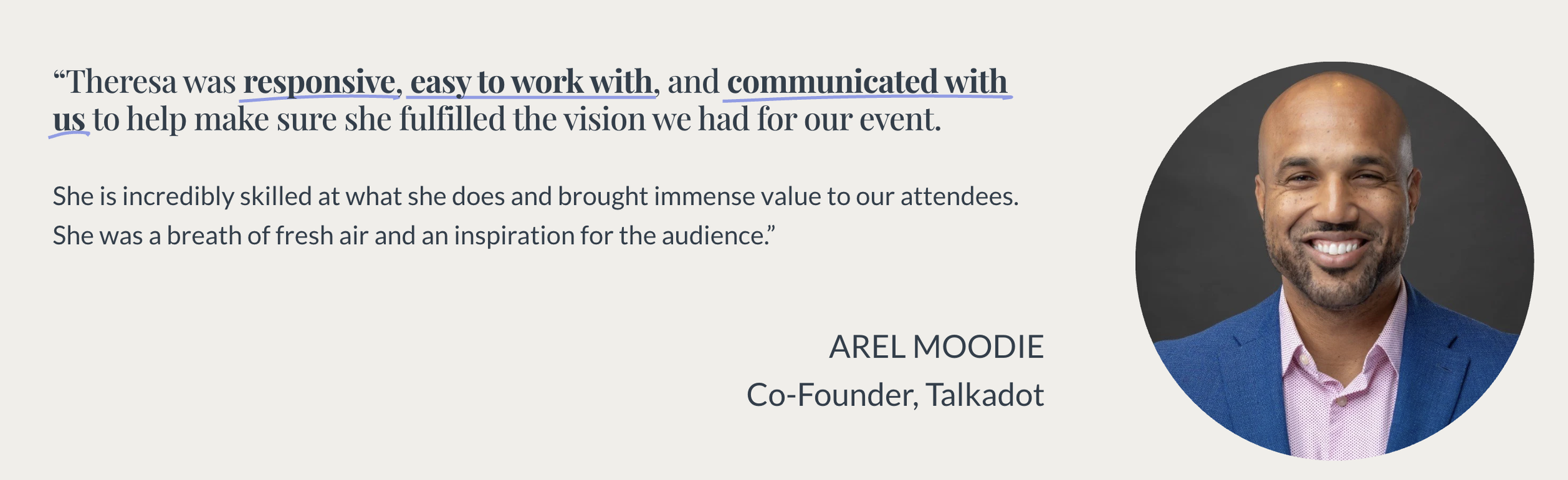

This line becomes the headline at the top of your testimonial, in big letters, so it actually gets read.
Step 2: Tell the story in three sentences
Next, choose one to three sentences (four, if you absolutely must) that tell the story of working with you. And you guessed it — they should answer those same three questions you asked:
Where were you before we worked together, and how did it feel?
Where are you now, and how does that feel?
What was the experience of working with me like?
When you're displaying the testimonial, feel free to swap the order of the last two so the story goes before → during → after. Either order works. What matters is that all three points get made.
Here's the magic of this: when a potential client reads that testimonial, they see their own before state reflected back at them. Then they see the after state they're hoping for. Then they see what it's like to get there with you. That's not a compliment — that's a story they can picture themselves in.
Step 3: Add the context
Finally, accompany your testimonial with:
A photo of the person who gave it
Their name
Any other context that's relevant to your audience — if you do C-level executive coaching, for example, their title and company carry a lot of weight
And that's it — you've got yourself a testimonial. Nice work!
Where to Put Your Testimonials
Skip the testimonials page
I know some people love having a dedicated Testimonials page on their site. I strongly disagree with this strategy.
Here's a quick exercise: log in to Google Analytics and see how much traffic your testimonials page gets. I'd bet it's very low compared to your home page or your services pages.
So why hide your best proof on a page people have to go out of their way to visit? (Spoiler: they mostly won't.)
Instead: spread them across your site
Integrate your testimonials across your site — one to three per page.
And make them contextual. A page about your workshops should feature testimonials from workshop attendees. A speaking page should feature testimonials from audience members or the event professionals who booked you. Your one-on-one coaching page should feature… well, you get the idea.
The closer the person in the testimonial is to the person reading it, the easier it is for your visitor to imagine getting the same great result.
Give each testimonial room to breathe
I've seen carousels that rotate to reveal more than three testimonials at a time. I've seen sliders that rotate through one testimonial at a time. Both tend to obscure your testimonials — and if a slider autoplays, it'll often switch to the next testimonial before your visitor has finished reading the current one. Frustrating!
Instead, give each testimonial its own space on the page, where it can be seen and actually read.
Be careful with the testimonial wall
I also generally recommend avoiding the "testimonial wall" — you know, a big grid of screenshots from emails, texts, and social media comments.
A couple of reasons why:
Images aren't readable by search engines, so all those glowing words do nothing for your SEO.
The text tends to show up tiny, which means people aren't actually reading these testimonials. They're just… scrolling past them.
There's one exception: a sales page for a particular product launch. On a sales page, the value of a testimonial wall isn't what any single testimonial says — it's the sheer volume of them. If you want people to see that dozens of previous customers were thrilled, go for it.
Otherwise, skip the wall.
Testimonials That Actually Work for You
It's really not complicated, in the end:
Ask the right questions when you collect testimonials
Tell the story of your client's experience by reflecting their answers back on the page
Make it contextually relevant — the right testimonial on the right page
Don't overwhelm or obscure your testimonials by cramming too many into one space
If you use this guide to improve your testimonials, I'd love to see them! Get in touch and show me what you've done.
Now go out there and get your testimonials working for you.

Hi, I'm David!
I've poured my 20+ years professional web design experience into delivering Website Intensives and Website Template Kits designed to help thought leaders (coaches, consultants, professional speakers) get the website they've always wished they had.